

Las Vegas is expanding its Medical District with new facilities and major investment, but a lack of residency slots threatens to send local medical graduates out of state and limit the region’s healthcare workforce
Steel rises over Charleston Boulevard. New towers and research labs fill the Las Vegas Medical District. The city is betting big on healthcare. But there’s a problem that money alone can’t fix. Not enough residency slots. That gap could stall the entire project.
Modern buildings don’t treat patients. Hospital leaders and medical school deans see the problem up close. Nevada’s own medical graduates are forced to leave for residency programs in other states. The city’s investment in bricks and mortar is running into a wall. The shortage of training slots could hold back the local healthcare workforce for years.
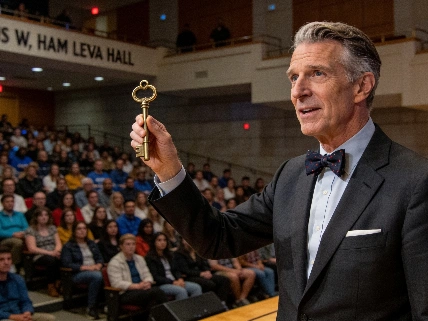
In 2026, a record 72 graduates from Touro University Nevada matched into Nevada residency programs, highlighting both progress and the ongoing need for more training slots.
Residency shortfall limits local talent
The Las Vegas Medical District covers 674 acres. It was set up by the City of Las Vegas to help Southern Nevada move beyond hospitality and gaming. At its heart stands the Kirk Kerkorian School of Medicine at UNLV. The $125 million Medical Education Building is now surrounded by biotech labs and outpatient centers. But the numbers don’t add up. Medical graduates need three to seven years of residency before they can practice on their own. Nevada’s residency slots are still near the bottom nationwide.
The Nevada Health Workforce Research Center reports that over 70% of doctors who finish both medical school and residency in Nevada stay to work here. If they leave for residency elsewhere, that number drops fast. Nevada keeps losing its own doctors to California, Texas, and Arizona. Those states locked in thousands of federally funded residency spots decades ago. According to Las Vegas Sun, by October 2026, about 60% of UNLV medical school graduates leave Nevada for residency. Only around 40% stay. UNLV offers 11 residency and 13 fellowship programs. School leaders say that’s not enough.
Federal cap leaves Nevada behind
The problem started with the federal Balanced Budget Act of 1997. That law froze the number of Medicare-funded residency slots at each hospital. Back then, Southern Nevada was much smaller. Nevada ended up with just 403 federally supported residency positions. California and New York got over 9,000 and 17,000 slots. The cap never changed. Nevada’s population and medical schools grew, but the number of training slots did not.
More students graduate from Nevada’s medical schools every year. But the state can’t offer enough residency slots. The result: top talent leaves. As reported by Las Vegas Sun, among graduates who complete residency or fellowship in Nevada, about 65% stay to work here. That shows how much local training matters.
In 2025, Nevada had only about 277 pediatricians—roughly 40 per 100,000 children—resulting in the highest ratio of children per pediatrician among Mountain West states. The Lincy Institute report recommends expanding graduate medical education programs to address this shortage.
Local push for state funding
Federal reform is stuck. Nevada’s healthcare leaders are now looking to state lawmakers. Ahead of the 2027 Nevada Legislative Session, the Kirk Kerkorian School of Medicine at UNLV and its hospital partners are asking for a dedicated state-funded graduate medical education budget. They want $10 million to $20 million every two years. The goal: create new residency pipelines that don’t depend on federal rules. University Medical Center and other hospitals are also building private and philanthropic partnerships to fund fellowships in emergency trauma, pediatrics, and internal medicine.
Officials warn that if training slots don’t grow fast, the Medical District’s new buildings will outpace the workforce needed for Southern Nevada’s aging and growing population. The risk is clear. Without enough residency positions, Las Vegas could end up with a healthcare district in name only. The doctors it trains may put down roots elsewhere.
Las Vegas has shown it can build a modern medical hub. But unless state leaders and hospitals act soon to fund more residency slots, the city’s investment will fall short. The future of healthcare in Southern Nevada depends on keeping its best medical minds at home. Bricks and mortar aren’t enough.