
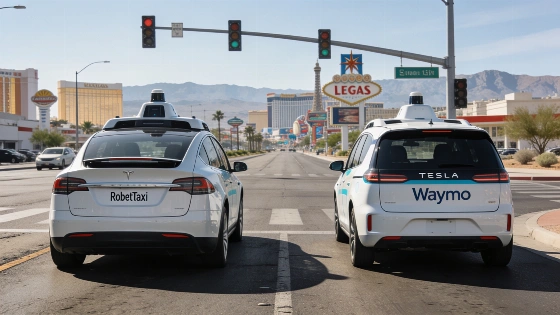
Tesla Robotaxi, Waymo and Uber’s Aviari have received approval to operate driverless passenger vehicles in Clark County, including Las Vegas, with fleet limits and regulatory conditions. Service must begin within 120 days of permit issuance.
Driverless passenger transportation is set to expand in Las Vegas after the Nevada Transportation Authority (NTA) approved Tesla Robotaxi, Waymo and Uber’s Aviari to operate autonomous vehicles in Clark County. The decision allows these companies to charge for rides in fully autonomous cars, provided they meet a series of regulatory requirements and vehicle limits.
The move marks a significant step for Las Vegas, where autonomous vehicle testing and limited pilot programs have been underway for several years. The new permits cover operations throughout Clark County, including the Las Vegas Strip and Harry Reid International Airport, though separate authorization from the Clark County Department of Aviation is still required for airport pickups and drop-offs.
Fleet Limits and Regulatory Conditions
Under the NTA’s approval, Tesla Robotaxi is permitted to deploy up to 5,000 fully autonomous vehicles in its first year, while Waymo and Aviari are each limited to 1,000 vehicles. All three companies must provide vehicle inspection documentation, maintain required insurance, submit fare rates for review, and share customer-facing app information with regulators. Additional requirements include compliance with accessibility rules, incident and crash reporting, and maintenance record-keeping. Operations must begin within 120 days of permit issuance, but no company can launch service until all conditions are met.
Waymo previously tested a small fleet of autonomous vehicles in Las Vegas with trained human specialists behind the wheel, using the data to refine its technology in other cities. The company applied for its passenger transportation permit in June. Aviari, a subsidiary of Uber, is also preparing to enter the Las Vegas market under the new regulatory framework.
Airport Access and Service Area
While the NTA’s approval covers Clark County, including the Strip and surrounding neighborhoods, access to Harry Reid International Airport remains subject to additional authorization. Companies must secure separate approval from the Clark County Department of Aviation before operating on airport property. This step is intended to ensure coordination with airport operations and maintain safety standards for travelers.
Industry Context and Local Response
The NTA’s decision follows nearly a year after Amazon’s Zoox launched a free autonomous rideshare pilot in the Las Vegas resort corridor. Zoox has since reported more than 3 million miles driven and nearly a million riders across Las Vegas, San Francisco, Miami and Austin. In July, Zoox received a federal exemption for its purpose-built robotaxi, allowing it to begin paid service in Las Vegas in August.
Tesla has also been active in Las Vegas, operating vehicles in the Vegas Loop tunnels, though those currently use human drivers. Tesla Robotaxi initially received a temporary permit for just 10 autonomous vehicles, limited to a section of the Strip with speed and pickup restrictions. The new approval significantly expands Tesla’s potential presence in the region.
The expansion of driverless services has drawn criticism from local taxi operators and some residents. Several taxi companies petitioned the NTA, warning that large-scale autonomous fleets could disrupt the existing passenger transportation industry and impact jobs. Resident concerns have also focused on safety, transparency, and the relative lack of commercial experience for some operators, particularly Tesla’s Robotaxi program.
What Happens Next
With permits now in place, Tesla Robotaxi, Waymo and Aviari must complete all regulatory steps before launching service. Each company will need to finalize insurance, submit rates, and ensure compliance with accessibility and reporting requirements. Operations must begin within 120 days of permit issuance, or the permits may be revoked. The NTA has indicated it will continue to review and adjust its regulatory framework as autonomous vehicle technology evolves and as companies scale up their Las Vegas operations.