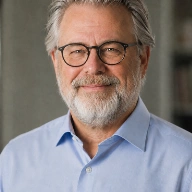
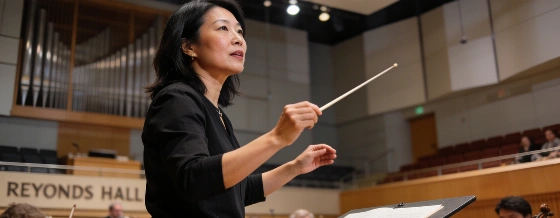
Rei Hotoda steps in as music director for the Las Vegas Philharmonic, promising a high-energy 2026-27 season with Studio Ghibli music, Beethoven, and a 'Very Vegas Christmas' at Reynolds Hall
Rei Hotoda, the new music director of the Las Vegas Philharmonic, is not easing into her role. She plans to open the 2026-27 season with symphonic music from Studio Ghibli films—a first for the orchestra and a clear sign that she wants to mix tradition with something new. Joe Hisaishi’s scores, now featured in major venues like the Philharmonie de Paris, have become a staple of contemporary orchestral programming, according to concert listings for Hisaishi in Paris.
Hotoda arrives as Las Vegas is trying to broaden its cultural scene beyond casinos and nightlife. Her plans for the Philharmonic are ambitious, combining familiar works with unexpected choices. The upcoming season will include music by Hisaishi, Beethoven in October, Handel’s “Messiah” in November, and a “Very Vegas Christmas” in December, all at Reynolds Hall. Beethoven’s appearance on the schedule is confirmed by a Las Vegas arts roundup, which lists "The Las Vegas Philharmonic: Beethoven" on October 17 at Reynolds Hall.
From piano prodigy to conductor
Hotoda started playing piano at age three, taught by her mother, who was a music teacher. That early start shaped her lifelong connection to music. “It’s the blood that feeds me,” Hotoda says about the piano, which remains central to her life even as she leads orchestras.
Growing up in Chicago, she was surrounded by music and culture—opera, piano concerts, comedy at Second City, and the city’s blues and jazz clubs. She earned a doctorate in piano performance before switching to conducting at USC, where she realized she wanted to lead not just a piano, but an entire orchestra.
Breaking barriers in conducting
Hotoda is part of a small but growing group of female conductors, who make up about 10 percent of the field worldwide. She points out that the training required is as demanding as that of a physician or surgeon. For her, the excitement of live performance is what keeps her coming back: unpredictable, intense, and never routine.
She approaches each concert with gratitude and excitement. “There is this thrill. You don’t know what will happen in front of an audience,” she says. That sense of risk is something she wants to share with Las Vegas audiences, who are used to spectacle but may not expect it from their orchestra. Internationally, orchestras are also turning to contemporary composers like Hisaishi. Reuters reports that the Philadelphia Orchestra will premiere a new Hisaishi work for its 2026 opening night, showing that Hotoda’s programming in Las Vegas is part of a larger trend. More details are in the Reuters/AP coverage of orchestral milestones.
Settling into Las Vegas
Hotoda’s move to Las Vegas has been a family project. She, her husband Brian, and their two children have explored the area’s outdoors, from camping at Mount Charleston to trying local restaurants like Double Zero pizza and spots in Chinatown. They’ve also attended Golden Knights and Aces games.
Not everything has gone smoothly. Her grand piano, used to the Midwest’s humidity, now has to cope with Las Vegas’s dry air. Hotoda keeps a close eye on it, determined to keep her “first baby” in good shape despite the desert climate.
Raising the arts profile in Southern Nevada
Hotoda sees Las Vegas as a city with more artistic potential than people realize. With ballet, opera, and the Philharmonic all active, she believes the city has what it needs for a strong arts scene. Her goal is to make the Philharmonic a draw for both locals and visitors looking for something beyond the Strip. Arts listings continue to show Las Vegas programming at Reynolds Hall and other venues, reflecting the city’s growing interest in classical and crossover performances.
Her arrival comes as Las Vegas entertainment is shifting, as seen when Carín León’s Sphere residency drew attention for its ambitious programming and logistical hurdles. Hotoda’s plans for the Philharmonic show a similar willingness to take risks and push boundaries.
With Hotoda at the helm, the Las Vegas Philharmonic is set for change. By programming new works alongside classics and embracing the city’s character, she aims to make the orchestra a bigger part of Las Vegas’s identity. Her approach is less about tradition for its own sake and more about what the arts can become in a city known for reinvention.