

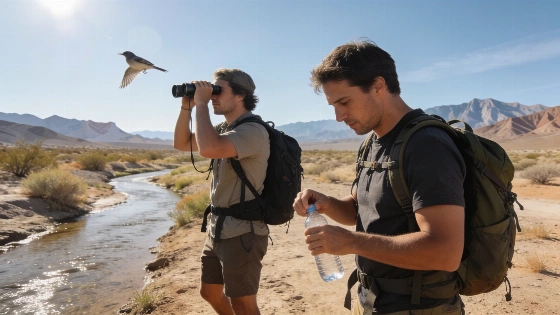
A new documentary follows a 112-mile trek from Griffith Peak to the Colorado River, highlighting water scarcity, desert wildlife, and the challenges facing Las Vegas’ ecosystem. Local screenings are scheduled this week
A new locally produced documentary, The Great Depletion, is bringing attention to the complex relationship between Las Vegas, its water sources, and the surrounding desert ecosystem. The film, now available on YouTube, follows biologist Alex Harper and filmmaker Austin Williams as they hike 112 miles over seven days, tracing the path of Las Vegas’ natural waterways from Griffith Peak in the Spring Mountains to the Colorado River.
The project aims to raise awareness about water scarcity, climate impacts, and the delicate balance of life in Southern Nevada. The filmmakers hope to connect local audiences with the region’s environmental challenges through a mix of adventure, science, and personal experience.
Documenting the Water Journey
Harper and Williams set out in spring 2025, limiting themselves to drinking only from free public water sources such as springs, parks, libraries, and community centers. This self-imposed rule highlights the realities of water infrastructure and the impact of urban development on the region’s most precious resource. Along the way, the film examines how Las Vegas’ conservation efforts have reduced per capita water use, even as the city’s population has grown, but also explores ongoing issues like the consumption of water by lawns, golf courses, and attractions such as the Bellagio fountains.
With the Colorado River’s flow declining and Lake Mead’s water levels at historic lows, the documentary underscores the need for continued adaptation. Harper notes that maintaining urban greenery and amenities like splash pads will require further changes if the city is to balance livability with sustainability.
Spotlighting Desert Wildlife
During their journey, Harper documented 110 bird species, with many featured in the film thanks to videography by Red Rock Audubon’s Dave Anderson. The documentary also showcases other desert wildlife, including sheep, rabbits, lizards, insects, and amphibians, emphasizing the interconnectedness of the region’s ecosystem.
The film uses the example of the pinyon jay—a species whose population has declined by 80%—to illustrate the broader impacts of environmental change. The pinyon jay plays a key role in spreading pinyon pine seeds and supporting pollinators, making its decline a warning sign for the health of the desert as a whole.
Expanding the Conversation
The Great Depletion is not the end of the story for Harper and Williams. The filmmakers are currently raising funds to continue their work, with plans to document similar water challenges along the Rio Grande in New Mexico. They are partnering with Friends of Bosque del Apache National Wildlife Refuge to explore how water shortages are affecting wildlife and communities beyond Nevada.
Local screenings of The Great Depletion are scheduled this week, offering Las Vegas residents and visitors a chance to engage with the film’s message and learn more about the region’s environmental future. For more information or to view the documentary online, visit the film’s YouTube page.