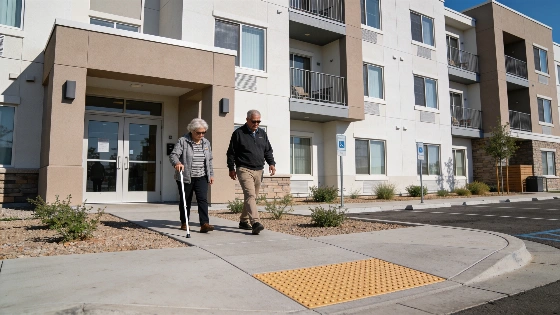
Visions Park, a $40 million affordable housing project with 99 units for blind and visually impaired residents, has officially opened near the Blind Center of Nevada’s main campus at 950 Visions Park Lane
Las Vegas has a new answer to the city’s chronic shortage of accessible housing: Visions Park, a 99-unit affordable community built specifically for blind and visually impaired Southern Nevadans, is now open just east of downtown.
Backed by $40 million in public and private funding, the project delivers not just apartments but a full suite of support services, all within walking distance of the Blind Center of Nevada’s main campus. The opening marks a rare, concrete step toward addressing the intersection of disability and housing insecurity in the region.
Purpose-Built Housing With Full Accessibility
Visions Park is not a generic affordable complex with a few ADA units tacked on. Every apartment—ranging from one to three bedrooms—features in-unit washers and dryers, accessible lighting, audio-tactile walkways, and full ADA compliance. Units come fully furnished, and residents share access to a community room designed for social connection and group activities.
The property’s location at 950 Visions Park Lane places it within immediate reach of the Blind Center of Nevada, allowing residents to easily access the organization’s resources and programs. The proximity is intentional: the Blind Center developed the project to ensure residents could participate in daily activities, training, and community life without transportation barriers.
Support Services Go Beyond Housing
Residents at Visions Park receive more than a roof over their heads. The Blind Center of Nevada provides free support services aimed at promoting wellness, independence, and employment. Offerings include orientation and mobility training, mental health navigation, mentoring, job development, fitness programs, and daily lunches. A food pantry is also available on site.
One standout feature is access to the Blind Center’s AI Innovation Lab, described as the first of its kind for the visually impaired community in Southern Nevada. This lab is intended to help residents build digital skills and pursue employment opportunities that might otherwise be out of reach.
Funding and Community Backing
Visions Park broke ground in September 2024 and was made possible through a complex web of funding sources. Major contributors include the Southern Nevada Regional Housing Authority, State of Nevada Home Means Nevada, Clark County Community Housing Funds, City of Las Vegas ARPA Funding, City of Henderson Affordable Housing Trust Funds, City of North Las Vegas CNLV Cares, and FHLBank San Francisco. Private donors such as Bill “Brother Bob” Thompson, the Davis Family Foundation, Paul Jaramillo, Galen Stockton, and the Rosalie and Harold Brown Charitable Trust also played key roles.
To ensure long-term sustainability, the Visions Park Sustainability Endowment was established with a matching grant from The Engelstad Foundation, Beverly Rogers, and other donors, including Bank of America. This endowment is earmarked for wraparound services that go beyond basic housing.
Opening Ceremony and Symbolism
The grand opening on August 27 was marked by a white ribbon-cutting—white being the symbolic color for blindness and vision loss. Residents, Blind Center leaders, and representatives from the State of Nevada, Clark County, and the cities of Las Vegas, Henderson, and North Las Vegas participated in the ceremony, underscoring the project’s regional significance.
For more information about Visions Park or to inquire about residency, visit VisionsPark.org.
Editorial Perspective: A Rare Model for Accessible Housing
Las Vegas has seen plenty of affordable housing announcements, but few projects match the specificity and follow-through of Visions Park. By integrating purpose-built design with robust support services and direct access to the Blind Center of Nevada, this development sets a new local standard for what accessible housing can look like. The $40 million investment—backed by a coalition of public agencies and private donors—demonstrates that targeted, community-driven solutions are possible when stakeholders move beyond rhetoric. The city’s housing crisis won’t be solved by one project, but Visions Park is a tangible, replicable model that other organizations and municipalities should be studying closely.