

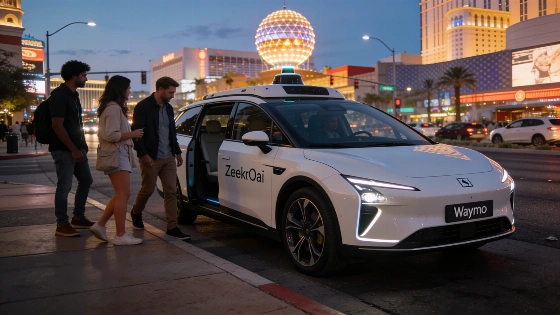
Waymo is set to roll out fully driverless rides across Las Vegas, using Zeekr-built Ojai vans to connect people to casinos, venues, and neighborhoods as the city moves forward with autonomous transportation.
Waymo is preparing to make driverless vehicles a regular sight in Las Vegas as it launches its autonomous ride-hailing service across the city. On September 14, 2026, Waymo began offering rides to the public in Las Vegas, marking its first commercial service in Nevada and another step in the company’s expansion into new states. The Zeekr-built Waymo Ojai vans will soon be available for trips to casinos, entertainment venues, and neighborhoods, changing how both visitors and locals get around. According to Reuters, Las Vegas is now Waymo’s 15th market in the U.S.
This rollout is different from earlier pilot programs that were limited to test tracks or small areas. Waymo and the City of Las Vegas are aiming for broad coverage. The initial service area covers about 24 square miles, with several dozen Ojai vehicles running Waymo’s sixth-generation autonomous system. There will be some geographic restrictions and likely some limits on highway use at first, but the goal is to make Waymo’s all-electric fleet part of daily transportation as soon as possible.
How the service will work
The Ojai vans, built by Zeekr for four passengers, will operate without a human driver. Riders can hail a vehicle using the Waymo app, with pickup and drop-off points at major destinations like the Sphere, Allegiant Stadium, and the Strip’s casino corridor. Waymo hasn’t released a full map of service boundaries or a date for citywide expansion, but the company is positioning Las Vegas as a key market for autonomous vehicles. Test runs with empty vehicles began as early as July 2026 to map and calibrate routes ahead of the launch.
City officials are backing the rollout. Las Vegas Mayor Shelley Berkley called it an investment in cleaner, safer urban mobility and pointed to the city’s interest in accessible, modern transportation. The city’s cooperation with Waymo could help bring driverless service to more neighborhoods and event areas. The Nevada Transportation Authority has already given Waymo regulatory approval to operate as an autonomous network operator in Clark County, as detailed in an Engadget summary.
Las Vegas as a testbed for autonomous tech
Las Vegas has a history of promoting itself as a place for spectacle and new technology, from the Sphere’s digital displays to themed resorts on the Strip. Adding driverless ride-hailing fits the city’s interest in high-profile tech. Waymo’s choice to focus on Las Vegas follows recent launches in Denver, San Diego, and Nashville, but Las Vegas’s mix of tourism, events, and round-the-clock activity makes it a unique test case for autonomous vehicles. According to company statements reported by Bloomberg, Waymo will gradually open up passenger access to ensure a smooth rollout and address any issues as they come up.
For visitors, the service promises easy access to entertainment and hotels without the hassle of taxis or surge pricing. For locals, it could offer new options for late-night rides and getting around neighborhoods. The launch comes as Las Vegas continues to update its infrastructure for major events and conventions, with transportation seen as a way to stay competitive.
What riders should expect
Waymo hasn’t said if its Ojai vans will use highways right away or if some areas will be off-limits at launch. Early users should expect some restrictions as the company and city work through technical and regulatory details. Still, the city’s public support suggests that coverage could expand quickly as the technology proves itself. Waymo has also said it will meet Nevada’s accessibility requirements for passengers with disabilities, following input from advocacy groups and regulators.
Las Vegas is used to changes in transportation. The city has seen recent shifts in air service, as reported earlier, and continues to invest in new ways to support its visitor economy. Waymo’s arrival adds another option to the city’s growing transportation network.
Editorial perspective
Waymo’s move into Las Vegas is a calculated bet on the city’s interest in new technology and efficiency. City leaders are eager to make Las Vegas a proving ground for autonomous vehicles, using its status as an entertainment hub to attract innovation. If Waymo can deliver reliable and safe service at scale, it could change how people get to places like the Sphere or Allegiant Stadium and set an example for other cities. The main question is whether the technology can keep up with the city’s unpredictable pace and high number of visitors. For now, Las Vegas is ready to find out and is willing to help make it work.