
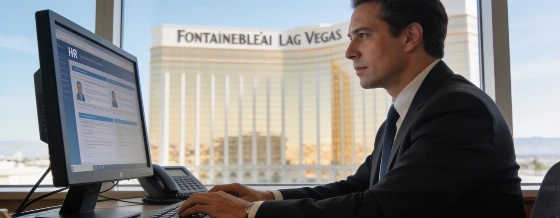
Fontainebleau Las Vegas filled 6,500 jobs for its 2023 opening using an AI recruiting system led by Henry Bui. The team hit a 92 percent offer acceptance rate and cut application time to just three minutes.
Fontainebleau Las Vegas did not just open in 2023. It changed how a Strip resort builds a team from the ground up. The property needed to hire 6,500 people in just a few months. Senior manager of HRIS Solutions Henry Bui led the HR team. They turned to artificial intelligence to rebuild the recruiting process. The result: a fully staffed luxury resort and casino, a smoother path for candidates, and a new hiring standard for Las Vegas hospitality. The opening capped years of delays. Local news confirmed the resort would open on December 13, 2023, after a long wait and several setbacks, as reported by News 3 Las Vegas.
Bui and his team skipped old-school hiring. Instead, they launched an AI-powered system built around "Morris," a digital assistant trained to answer more than 400 questions. This was not just about speed. The tech was designed to show off the Fontainebleau brand and give every applicant a personal touch. The numbers are clear: applications took just three minutes, average time-to-hire was 14 days, and 92 percent of offers were accepted. In three months, the team processed nearly 300,000 applications without needing more recruiters. Still, there is no independent confirmation of these exact AI recruiting numbers in outside job-market or HR industry reports.
How AI changed the candidate experience
For most job seekers, their first contact with Fontainebleau Las Vegas was a chat with Morris. Bui said it was crucial that the tech put candidates first. "Technology only works when it’s built around the candidate experience, not the other way around," he said. The team kept it simple: every system had to make things better for the person applying, not just for HR. This approach worked. More than half of applicants filled out surveys, and 93 percent said they had a good experience.
Recruiters saw the benefits too. The AI system let them handle a flood of applications and fill jobs fast, all without burning out the team. The project gave HR a bigger voice in the company. Bui pointed out that building a workforce at this scale is not just paperwork—it shapes the brand and the guest experience.
Building for the future of hospitality
Bui’s work at Fontainebleau Las Vegas got noticed. Microsoft’s Prerna Ajmera, a former HR’s Rising Stars winner and judge, called the project a "redesign" of recruiting, not just automation. She said Morris turned a slow, clunky process into a three-minute chat that showed off the brand and could scale up. This, she said, is the kind of leadership that points to where HR is going.
The lessons from Fontainebleau’s opening still guide Bui’s approach to tech and people. The resort is now working to bring AI into more parts of its workforce. The goal is to make sure employees know how to use new tools and feel confident doing so. That means investing in training, making space for questions, and showing how AI can take over repetitive tasks so staff can focus on work that matters. As Bui puts it, "People first, technology second, experience always."
Personalization at scale for frontline teams
Most of Fontainebleau’s staff work on the front lines. Bui’s team has made it a priority to meet employees where they are. Communication, tools, and benefits info are kept simple, mobile-friendly, and actually useful. Personalization matters—even with thousands of staff, the systems are built so every team member feels seen, no matter their job or shift. Current job-market materials describe the property as a Forbes Travel Guide Five-Star and Michelin Key resort, putting it at the ultra-luxury end, according to Bread Bakers Guild of America job listings. As of September 2026, Fontainebleau Las Vegas is still hiring for roles like bakers, stewards, spa hosts, and security. Job ads show hourly pay in the low-to-mid $20s, including $26.13 per hour for banquet stewards and $21.63 per hour for club security officers. This shows the resort’s focus on competitive pay for frontline staff.
Sara Piper, executive director of People and Talent Acquisition at Fontainebleau, said Bui brings a rare mix of operational discipline, digital know-how, and execution. She credited him with connecting people strategy and technology, leading big changes while keeping HR systems running strong.
Las Vegas context and industry impact
Fontainebleau Las Vegas is not the only property in town using tech to solve big staffing challenges. As reported earlier, other major venues are also turning to scalable solutions for large events and openings. But Fontainebleau’s approach stands out for putting people at the heart of its tech, setting a new bar for how resorts can blend digital tools with hospitality values.
Bui’s vision is simple: stay flexible, keep people at the center, and use tech and data to make work better for everyone. In Las Vegas, where hospitality is the main business, Fontainebleau’s hiring strategy is more than a tech upgrade. It is a blueprint for how resorts can compete for talent and meet guest expectations as the market changes. The results from Fontainebleau’s opening are clear: when tech is used with a people-first mindset, both the business and its workers come out ahead. That is a lesson other Las Vegas resorts may want to follow as the city’s hospitality scene keeps evolving.