
A civil rights lawsuit in Clark County accuses a downtown Las Vegas casino of racial profiling and unlawful ejection. The case seeks damages and policy changes that could affect Nevada’s gaming industry.
Security staff at a downtown Las Vegas casino are facing a civil rights lawsuit. A patron claims he was singled out and forced out because of his race. The case, now in Clark County District Court, questions how Nevada casinos treat guests and enforce public accommodation laws.
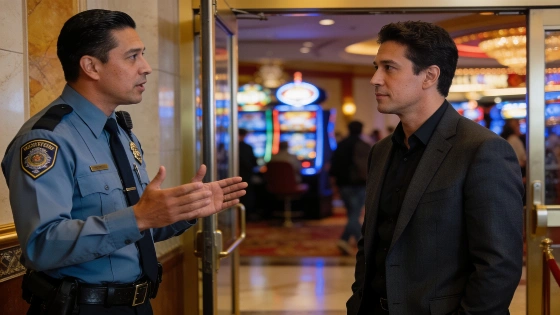
The Las Vegas Review-Journal’s 7@7 desk first reported the lawsuit. The plaintiff says security approached him while he was playing and using the casino’s hospitality areas. He says he broke no rules and did what staff asked. Still, he was told to leave or face a trespass citation. The complaint claims other guests, who were not minorities, did the same things but were left alone. The lawsuit calls this part of a bigger problem with how downtown casinos enforce their rules.
As of late September 2026, the most recent high-profile federal discrimination lawsuit involving a downtown Las Vegas casino is not about racial profiling, but centers on alleged religious discrimination and the firing of a Jewish employee for refusing to remove her headscarf, according to the U.S. Equal Employment Opportunity Commission.
Legal claims and regulatory standards
The lawsuit was filed on September 29, 2026, in the Eighth Judicial District Court. It lists several claims: racial discrimination, selective profiling, unlawful ejection, intentional infliction of emotional distress, and negligent training or supervision of security staff. The legal basis includes Nevada Revised Statutes Chapter 651, which protects equal access to public spaces, and Title II of the Civil Rights Act. The plaintiff wants damages, attorney fees, and a court order forcing the casino to change its security policies.
The lawsuit goes further than money. It asks the court to require racial bias and de-escalation training for all security staff. It also calls for new security manuals and an independent audit process for future ejections. The Nevada Gaming Control Board could get involved. If the casino is found to discriminate, it could face discipline under Regulation 5, which sets standards for how gaming properties must act and protect their reputation.
According to Bloomberg Law and Casino.org, a recent federal case (2:26-cv-03088) filed by the EEOC against Circa Resort & Casino alleges that a cashier was not allowed to return to work after refusing to remove a religious headscarf and was subsequently terminated in July 2024. The EEOC claims this violated Title VII of the Civil Rights Act of 1964, which requires reasonable religious accommodation unless it poses undue hardship. The agency attempted to resolve the dispute through administrative conciliation before filing suit, but no agreement was reached.
Public accommodation laws in Nevada casinos
Nevada law says licensed casinos cannot deny entry or service for discriminatory reasons. Casinos can remove guests who are disruptive or suspected of cheating. But courts have ruled they cannot use race, color, religion, national origin, or sexual orientation as a reason. The complaint says the casino broke these rules. If the claims hold up, regulators may step in.
This case puts a spotlight on how Las Vegas casinos balance their rights as private businesses with civil rights for guests. The Nevada Equal Rights Commission says public accommodation laws are meant to let everyone use Nevada’s hospitality services without bias or unfair exclusion. That’s the law.
Industry impact and next steps
The casino operator has not yet responded in court. The result could change how downtown casinos train security and keep records of guest incidents. Regulators are watching for “unsuitable method of operation” violations. The lawsuit’s push for audits and training shows this is about more than one person’s claim. It’s about changing the system.
Las Vegas hospitality practices have faced legal and regulatory review before. As shown in a previous investigation into airport and tourism priorities, the city’s economy depends on fairness and open access. If guests feel they are treated unfairly in major casinos, that reputation is at risk.
This lawsuit forces Las Vegas casinos to show how they enforce their rights while following civil rights laws. The industry’s trust with regulators and the public depends on equal treatment for every guest. If the court orders policy changes, downtown casinos could see new rules for security and guest relations on the gaming floor. Change may be coming.