
Derek Stevens’ At Par initiative drew over 120000 Canadians to Fremont Street by matching Canadian dollars to US value through August, helping downtown casinos offset a sharp drop in international tourism
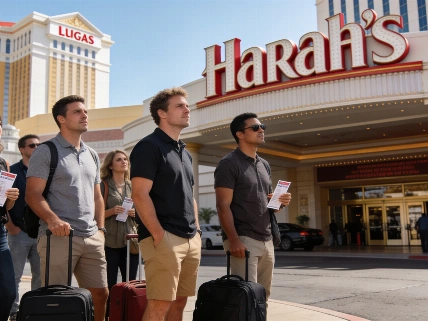
Fremont Street’s summer crowds looked different this year, and the reason was unmistakable: a wave of Canadian visitors who arrived in numbers not seen since before the pandemic. The catalyst was Derek Stevens’ At Par program, which offered Canadian guests a dollar-for-dollar exchange at his downtown Las Vegas properties, effectively neutralizing the sting of unfavorable currency rates.
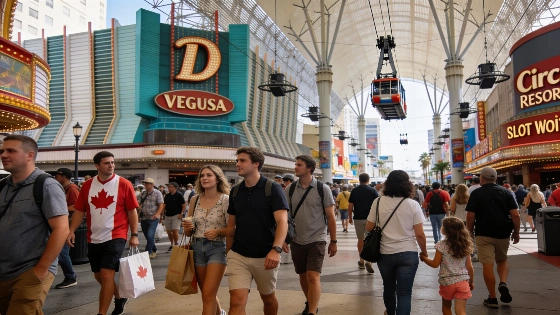
For eight months, from January through August, the D Las Vegas, Golden Gate Hotel & Casino, and Circa Resort & Casino welcomed more than 120,000 Canadian tourists under the At Par promotion, according to the operators. The program’s simple premise—$1 in value for every Canadian dollar spent—removed a major financial barrier for international travelers wary of exchange losses. The result: a visible uptick in foot traffic and hotel occupancy on Fremont Street, especially during the typically sluggish summer months.
How At Par Changed the Downtown Equation
Downtown Las Vegas has long relied on a mix of locals and older gamblers, but the At Par program shifted the demographic balance. Casino executives, facing a steep decline in Canadian tourism due to trade tensions and currency volatility, turned to aggressive marketing and targeted offers. Stevens’ approach stood out for its directness and scale, with Fremont Street Experience CEO Cliff Atkinson describing the influx as transformative for both downtown and the broader Las Vegas destination.
Atkinson noted that on certain nights, the presence of Canadian guests was so pronounced it felt as if they had taken over Fremont Street. The effect was amplified during events like the June 27 Finger Eleven concert, where fans expressed gratitude for both the free entertainment and the financial accessibility provided by At Par. The program’s timing was strategic, filling a gap as post-pandemic visitation records faded and summer demand softened. Plaza Hotel & Casino CEO Jonathan Jossel credited free Friday fireworks and all-inclusive hotel packages for keeping weekends busy, but acknowledged that creative offers like At Par were essential to maintaining momentum.
Entertainment and Safety Drive Broader Appeal
Fremont Street’s resurgence is not just about currency deals. The area has invested heavily in free entertainment, diverse food options, and family-friendly attractions such as the Slotzilla zip line, the Mob Museum, and the Neon Museum. Atkinson emphasized that safety remains a top priority, with a visible police and private security presence. “Frankly, I think we’re the safest street in America, given the presence that’s here, the amount of people,” he said, underscoring the area’s commitment to rapid response and crowd management.
Efforts to attract younger visitors have also paid off. This year’s free concert series, including a performance by Sleeping with Sirens, drew more than 15,000 attendees and introduced a new generation to downtown’s evolving nightlife. The data shows a rise in daytime family activity as well, with attractions like Slotzilla providing insight into changing visitor patterns. Atkinson reported that families are increasingly finding value in the downtown experience, a shift from the area’s traditional image.
Downtown’s Competitive Edge and Future Prospects
Downtown Las Vegas benefits from its dense cluster of nine casinos, walkable layout, and proximity to unique attractions. Operators have responded to shifting visitor expectations by adding amenities such as smoke-free gaming spaces, pickleball courts, and all-inclusive packages. The Plaza’s recent high-limit slot room launch, as reported earlier, is one example of how properties are targeting specific market segments to stay competitive.
While the At Par program ended in August, its impact lingers. Downtown’s ability to adapt—whether through currency-matching offers, free concerts, or new amenities—has kept it relevant as visitor habits evolve. The challenge now is to sustain this momentum as international travel patterns remain unpredictable and competition from the Strip intensifies.
What’s clear is that downtown Las Vegas is not content to be a backup plan for Strip overflow. The willingness of operators like Derek Stevens to experiment with bold, guest-focused incentives has set a new standard for how the city can respond to global headwinds. If the rest of Las Vegas wants to keep pace, it will need to match downtown’s appetite for risk and reinvention—because in this market, standing still is not an option.