
A tourist was detained by ICE and deported after a domestic dispute at The Buffet at Wynn in April, despite prosecutors declining charges. The case highlights how resort incidents can trigger federal action for visitors with pending immigration cases.
A single slap inside The Buffet at Wynn escalated into a months-long ordeal for a Southern California tourist, ending with her deportation from the United States. The incident, which began as a family dispute at Encore Las Vegas, quickly drew in local police, resort security, and ultimately federal immigration authorities—underscoring the high-stakes consequences that can follow even minor altercations on the Las Vegas Strip.
Arpine Misakyan, 28, was arrested on April 6 after security at Encore Las Vegas reported a domestic battery involving her husband during dinner at the resort’s buffet. Although the Clark County District Attorney’s office declined to pursue charges, Misakyan’s arrest triggered a chain of events that led to her detention by Immigration and Customs Enforcement (ICE) and her removal to Armenia three months later.
How a Buffet Dispute Became a Federal Case
The confrontation began with a family argument over a phone, according to police records. Security cameras at Wynn Las Vegas captured Misakyan slapping her husband, Karen Harutyunyan, after what he described as “too much party and enjoy” earlier in the day. Hotel staff called Las Vegas Metropolitan Police Department (LVMPD), who arrived at Encore at 7:37 p.m. and found a language barrier with the family, who spoke Russian.
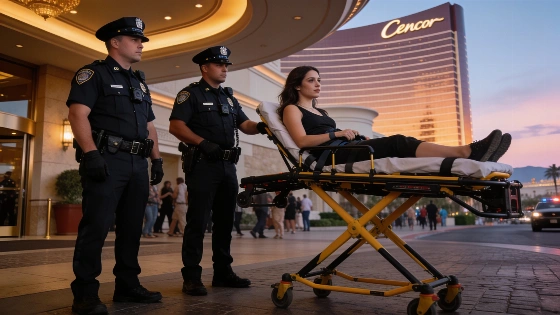
Bodycam footage obtained by local media shows officers questioning the family and resort security. Misakyan was placed in handcuffs by Wynn security before being transferred to police custody. She was removed from the property on a stretcher after complaining of high blood pressure and difficulty breathing, while her family protested the arrest at the entrance to Encore.
Clark County Policy and ICE Notification
Despite the District Attorney’s decision not to file domestic battery charges, Misakyan’s arrest for a qualifying offense triggered Clark County’s policy of notifying ICE when foreign-born individuals are booked for certain crimes, including domestic violence. According to LVMPD policy, the Detention Services Division alerts ICE both at booking and release for offenses deemed to have “the highest impact on public safety.”
Misakyan was initially held at the Henderson Detention Center before being transferred to the Adelanto ICE Processing Facility in California. ICE confirmed that she accepted voluntary departure and was removed to Armenia on July 4, 2026, even though she had a pending asylum case at the time of her arrest.
Resort Security and Law Enforcement Response
Wynn Las Vegas declined to comment on the incident, referring inquiries to LVMPD. The police department did not comment on the specifics of Misakyan’s arrest but provided its standard procedures for ICE notifications. The bodycam video reveals a tense scene as officers attempted to separate family members and enforce Nevada’s mandatory 12-hour hold for domestic violence arrests, regardless of the severity or outcome of the charge.
Misakyan’s daughter, who was present during the arrest, pleaded with officers to allow her to comfort her mother, but police cited state law and the need to keep the parties separated. The family’s attempts to intervene were met with warnings from officers about hindering law enforcement.
Impact on Visitors and the Resort Corridor
While the majority of Las Vegas Strip incidents never escalate beyond resort security or a brief police report, this case demonstrates how quickly a minor dispute can spiral into a life-altering legal and immigration crisis for visitors. According to the Deportation Data Project, ICE made 301 arrests in southern Nevada in July alone, with resort corridor incidents representing a small but high-profile subset.
For tourists with unresolved immigration status or pending asylum claims, even a declined charge can result in detention and removal if local law enforcement policies trigger federal notification. The intersection of resort security, local police, and federal agencies creates a complex environment where a single incident can have consequences far beyond the original dispute.
Las Vegas resorts and local authorities have long maintained that public safety is paramount, especially in high-traffic venues like Encore Las Vegas and The Buffet at Wynn. But the Misakyan case exposes the reality that for some visitors, a momentary lapse in judgment can lead to permanent separation from the United States—regardless of prosecutorial discretion or the underlying facts. The Strip’s reputation as a playground for adults comes with a warning: what happens in Las Vegas can follow you far beyond the city limits, especially when federal agencies are involved.