
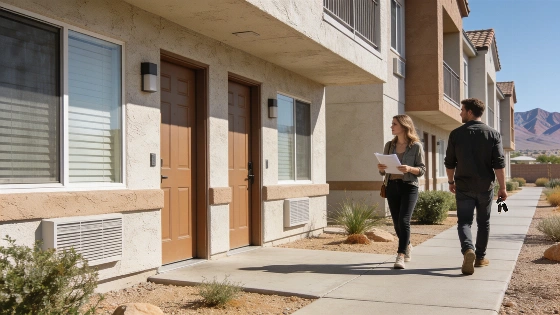
Apartment rents across the Las Vegas Valley are declining, with one-bedroom units seeing double-digit drops in several neighborhoods as new multifamily buildings open and rental concessions rise in 2026.
Rents for apartments across the Las Vegas Valley are falling, with one-bedroom units experiencing notable year-over-year declines in nearly every major neighborhood, according to a new report from Zumper. The trend comes as a wave of new multifamily construction, started during the pandemic, continues to deliver fresh supply to the market.
In July, Winchester—covering the north end of the Strip and areas to the east—saw the steepest drop, with one-bedroom rents down 18.8% compared to the previous year. North Las Vegas followed with a 14.5% decrease, while Spring Valley in the southwest posted a 9.7% decline. Other areas also saw reductions: Henderson rents fell 6.5%, Enterprise dropped 3.3%, Paradise slipped 1.3%, and the city of Las Vegas itself edged down 0.8%.
Rental Concessions Reach Record Levels
The influx of new apartments has led property owners to compete more aggressively for tenants, often offering incentives such as free rent or reduced deposits. According to a June rental report from Zillow, 51.7% of Las Vegas-area apartment listings now include concessions—well above the national average of 39.7%. This makes Las Vegas the national leader in rental concessions among the 50 largest U.S. metro areas.
Crystal Chen, a spokesperson for Zumper, said the current market is favorable for renters, especially as the busiest season for apartment searches approaches. She noted that every submarket tracked in the latest metro report is now showing annual declines for one-bedroom units. In Enterprise, for example, the median rent for all apartment types is down 3.3% year over year, while active listings have increased by about 8% when comparing the second quarter of 2022 to the second quarter of 2026.
Two-Bedroom Rents and Market Outlook
Two-bedroom rents have also softened, with rates either flat or declining across most of the valley in July. The exception is North Las Vegas, where two-bedroom rents rose 1.3% year over year. The overall trend reflects the impact of increased supply and shifting demand, as more units become available and renters gain greater negotiating power.
Whether rents will return to pre-pandemic levels remains uncertain and will depend on how quickly the new supply is absorbed, as well as future trends in migration and job growth. For now, the data suggests that renters hold the advantage in the Las Vegas apartment market, with more options and incentives available than in recent years.
What Renters Should Know
With active listings up and rental concessions at record highs, prospective tenants in Las Vegas have more leverage than at any point in recent memory. Those searching for apartments this summer and fall can expect to find a wider selection, lower prices in many neighborhoods, and a greater likelihood of incentives from landlords eager to fill new units. The situation may continue to evolve as the market adjusts to the ongoing influx of new apartments and changing economic conditions in Southern Nevada.