
WAVR Technologies, a Summerlin-based startup, is developing atmospheric water harvesting systems that can produce water from desert air, with plans to reach 10,000 gallons per day per unit by 2027
A Las Vegas startup is working to address Southern Nevada’s water scarcity by developing technology that extracts water directly from the air—even in the region’s dry desert climate. WAVR Technologies, based in Summerlin and spun out of UNLV, is commercializing atmospheric water harvesting systems designed to operate at humidity levels as low as 10 percent.
The company’s approach is inspired by the Australian tree frog, which absorbs moisture through its skin. WAVR’s founders, including CEO Rich Sloan, chief technology officer Dr. Yiwei Gao, and UNLV professor Dr. Jeremy Cho, have developed a synthetic membrane that mimics the frog’s ability to attract and absorb ambient moisture. The technology was first patented during Gao’s Ph.D. research at UNLV.
How the Technology Works
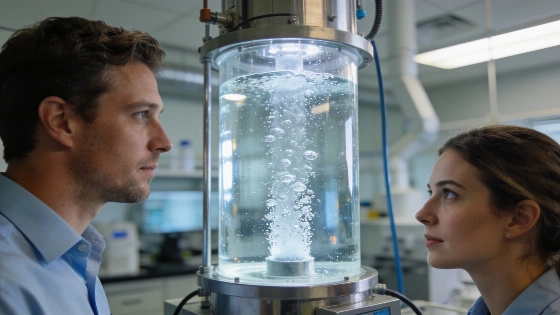
WAVR’s system uses a specialized membrane to absorb moisture from the air, even in extremely dry conditions. The absorbed moisture is then heated, turning it into steam, which is condensed into purified water. According to the company, the system operates continuously, 24 hours a day, year-round.
When WAVR launched in 2024, its prototype produced only a few milliliters of water daily. The latest generation now yields up to 20 liters per day per unit, with plans to scale up to 10,000 gallons per day per unit by the end of 2027. The company envisions large-scale systems about the size of a shipping container, as well as smaller pilot units for medical applications, such as kidney dialysis, that currently generate five gallons per day.
Funding and Local Investment
WAVR is in the process of raising $4 million in funding, with $1.25 million already secured and $975,000 in booked revenue. The company has received grants from the National Science Foundation and WaterStart, and investments from Desert Forge Ventures, a Las Vegas-based venture capital fund led by former UNLV president Len Jessup. Desert Forge Ventures made its first investment of $500,000 in WAVR last year and has committed an additional $250,000 to lead the company’s seed round. A co-investment Special Purpose Vehicle capped at $1.5 million is open to community investors through August 31.
WAVR’s funding also qualifies the company for matching funds of up to $1 million from Nevada’s Battle Born Growth Escalator fund, which previously matched Desert Forge’s initial investment. State officials, including the Governor’s Office of Economic Development, have highlighted WAVR as an example of innovation-driven economic development in Nevada.
Potential Impact for Las Vegas and Beyond
Research led by Dr. Cho at UNLV suggests that the first 30 feet of atmosphere above Clark County contains enough water to meet the region’s daily needs. WAVR’s technology aims to tap into this resource, providing an alternative to traditional water sources like Lake Mead. While the company’s long-term goal is to help address global water challenges, its initial focus is on industrial applications, particularly for AI data centers that require large volumes of water for cooling.
WAVR’s system produces reverse osmosis-grade water and is designed to reduce dependency on municipal supplies. The company has also developed a separate loop in its device that reduces electricity consumption by more than 95 percent compared to conventional methods. While it may take years for the technology to make a significant impact on regional water supplies, WAVR’s founders believe Las Vegas is an ideal location to develop and scale solutions for water-stressed environments.
What Comes Next
WAVR plans to continue evolving its technology, with new generations of its system in development every few months. The company’s goal is to attract industries to Southern Nevada by ensuring reliable access to water, while also building a business that could eventually reach a valuation of over $1 billion. If successful, WAVR could add billions of gallons of water to human use cases over the life of the company, according to its leadership.