
With Qantas launching Sydney service in December and Air France flying to Paris, Las Vegas airport and tourism leaders are now focused on securing direct flights to Tokyo, with future ambitions for routes to the Middle East and Asia.
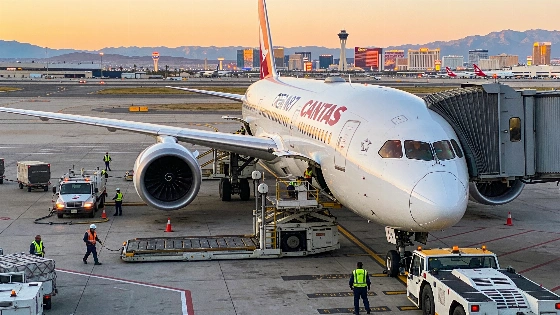
Las Vegas is preparing for a new era of international air service as Harry Reid International Airport gets ready to welcome its longest nonstop route yet: Qantas Airlines’ direct Sydney-Las Vegas flights, set to begin in December. With this milestone, local tourism and airport officials are turning their attention to the next major target—restoring nonstop service to Tokyo and expanding connections to other key global markets.
Qantas’ Sydney route, announced earlier this year, marks the first direct link between Australia and Las Vegas. The 15-hour flight is expected to serve the roughly 250,000 Australians who visit Southern Nevada annually, and its launch is seen as a significant win for the region’s visitor economy. Air France’s existing Paris service further strengthens Las Vegas’ international reach, but leaders say more is needed to keep pace with global demand.
Tokyo Tops the Wish List
According to Steve Hill, president and CEO of the Las Vegas Convention and Visitors Authority, Tokyo is now the most sought-after international market without direct service to Las Vegas. The city previously had nonstop flights to Tokyo in the late 1990s, but those routes ended years ago. Hill notes that demand from Japan remains high, with recent research showing a 10.5 percent increase in Japanese visitation to Las Vegas in 2025 compared to the previous year—the largest jump among all international source markets.
Efforts to secure a Tokyo route were underway before the pandemic, but global disruptions and aircraft delivery delays have slowed progress. Hill points to ongoing supply chain issues at Boeing and high jet fuel prices as factors making airlines cautious about launching new long-haul routes. Despite these challenges, Tokyo remains the top priority for new international service at Harry Reid International Airport.
Middle East and Asia in Focus
While Tokyo leads the list, Las Vegas aviation and tourism leaders are also eyeing future connections to the Middle East and other parts of Asia. Brendan Bussmann, managing partner at B Global, believes a direct flight to Dubai could open up not only the United Arab Emirates but also serve as a gateway to India and other populous regions. Bussmann notes that the Middle East’s aviation market is expected to grow, and Dubai’s connectivity could benefit Las Vegas in the long term.
Other Asian markets are also under consideration. Las Vegas previously had nonstop service to Beijing via Hainan Airlines and to Hong Kong and Singapore through Singapore Airlines, but those routes ended due to financial and operational challenges. Currently, travelers can reach Hong Kong, Singapore, and Beijing by connecting through Korean Air’s nonstop service to Seoul, which remains one of the airport’s most stable international links.
Competition and Recruitment Efforts
Securing new international routes is a competitive process. Las Vegas relies on a dedicated team, including the Las Vegas Convention and Visitors Authority and Clark County’s Aviation Department, to recruit airlines and promote the city as a destination. Joel Van Over of Ailevon Pacific Aviation Consulting leads these efforts, attending global industry events like Routes World to connect with airline decision-makers and correct outdated perceptions of Las Vegas.
Van Over says the Qantas Sydney route was a top priority and came together faster than expected, thanks in part to the use of the Boeing 787 Dreamliner, which is well-suited for Las Vegas’ high-altitude, hot-weather conditions. The flight is expected to operate with early-morning arrivals and departures to optimize performance.
Passenger Numbers and the Road Ahead
Despite these international ambitions, 2026 has brought mixed results for Harry Reid International Airport. The closure of Spirit Airlines in May contributed to a 6.4 percent drop in domestic passenger counts for the first half of the year, while international passenger numbers fell 10.8 percent to just over 1.6 million. These declines have added urgency to efforts to secure new long-haul routes and restore international growth.
With Qantas’ Sydney service set to launch in December, Las Vegas officials hope its success will help attract additional nonstop flights from Tokyo, the Middle East, and other major global markets. The city’s ability to compete for coveted long-haul routes is seen as essential for maintaining its status as a top international destination and supporting the broader visitor economy.