
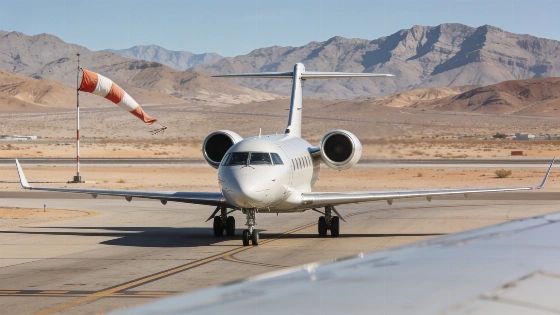
Wind and low clouds disrupted flights at Harry Reid on Sunday, helping push nationwide delays to 4,182. The FAA forecast possible programs at major airports on Monday evening, but had not confirmed restrictions.
The FAA put Harry Reid International Airport under a ground-delay program at about 8 a.m. Sunday, citing low clouds and strong winds. By the end of Oct. 11, the airport had recorded 417 delays and 45 cancellations, the highest cancellation total among U.S. airports tracked in the reported data. Wind pushed departure delays higher as the airport became the country’s most visible pressure point in a day that brought 4,182 delays and 225 cancellations nationwide.
More disruption was possible Monday evening. The FAA forecast potential ground stops or delay programs at LaGuardia and Reagan National. JFK and Philadelphia were also on the list, along with San Francisco, Newark and Baltimore/Washington International. These were forecasts, not confirmed restrictions.
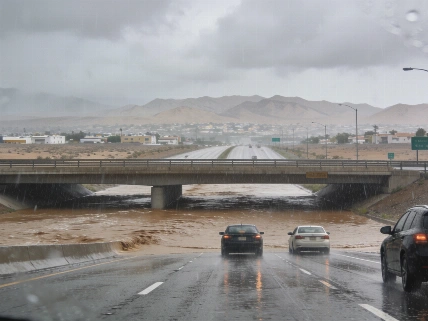
The National Weather Service issued both a high-wind warning and a flood warning for the Harry Reid area, covering 2 a.m. Oct. 11 through 5 a.m. Oct. 12 PDT.
Wind puts Las Vegas at the center
The FAA advisory showed average departure delays of 15 minutes and increasing at Harry Reid, with a 24% departure delay rate and a 25% arrival delay rate. The Oct. 11 ground-delay program ran from about 8 a.m. through 11:59 p.m. local time because of low clouds and strong winds, KSNV News 3 Las Vegas reported. FOX5 and KSNV also reported average arrival delays of about 50–51 minutes, compared with roughly 15 minutes for departures. Desert crosswinds funneled through the mountain-ringed Las Vegas Valley can reduce arrival and departure rates when they exceed safe crosswind limits.
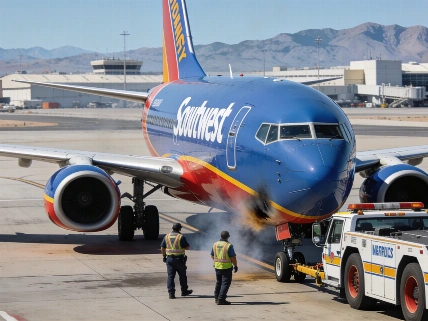
The effects reach beyond the airport gates. Las Vegas serves leisure travelers balancing hotel checkout times against rental-car returns, often with a connecting flight to catch. Southwest operates the most frequent service at Harry Reid. Delays to aircraft on its point-to-point network can carry over to later flights serving Dallas and Denver, as well as Phoenix. Southwest and United were among the carriers affected across the wider disruption. American and Delta were affected too, along with JetBlue and Spirit. Frontier and Alaska were also among them.
A recent Harry Reid flight report described a single-aircraft problem. Sunday’s totals point to a different challenge: wind and broader airport capacity affected departures and arrivals.
FlightAware figures cited by KSNV showed 375 delays and 45 cancellations at Harry Reid in an earlier snapshot on Oct. 11. FOX5 later reported 522 delays and 47 cancellations, reflecting how the day’s totals rose over time.
Construction and ceilings slow other hubs
Boston Logan recorded 255 delays and 16 cancellations. A runway-construction ground-delay program produced an average delay of 70 minutes. The FAA listed it from 5 p.m. UTC on Oct. 11 through 3:59 a.m. UTC on Oct. 12. Rehabilitation of Runway 4R/22L has reduced the airport’s ability to use runways simultaneously. When Boston-bound aircraft are held at their departure airports for assigned slots, late arrivals can disrupt their next scheduled flights.
Philadelphia recorded 248 delays and 11 cancellations as low cloud ceilings prompted a 66-minute ground-delay program. Lower ceilings reduce the rate at which aircraft can safely land. That requires greater spacing between arrivals and creates delays at departure airports. Philadelphia’s departure delay rate was 17%; its arrival delay rate was 19%.
Miami reported 108 delays and six cancellations, with volume constraints cited as a factor. Phoenix Sky Harbor faced volume restrictions under an advisory running until 8 p.m. local time. Charlotte Douglas had a confirmed thunderstorm-related ground stop from 11:43 a.m. to 1 p.m. UTC on Sunday.
FAA outlook and passenger options
The FAA’s Monday outlook listed possible ground stops or delay programs at Orlando and Tampa after 3 p.m. UTC. San Diego was listed after 3 p.m.; LaGuardia and Reagan National after 4 p.m. JFK was listed after 5 p.m., Philadelphia after 6 p.m. and San Francisco after 6:30 p.m. Dulles was listed after 7 p.m. Newark and BWI were listed after 8 p.m. The FAA’s Oct. 11 forecast also identified possible restrictions at Phoenix and Boston, among other airports. These were potential programs, not confirmed restrictions. The agency’s live status board at nasstatus.faa.gov provides updates on active programs. FlightAware and FlightRadar24 also track flight operations.
For Las Vegas passengers, the distinction between compensation and a refund matters. Weather and infrastructure disruptions generally do not require airlines to pay cash compensation for delays or cancellations. But passengers whose flights are canceled can choose a full refund to the original form of payment instead of travel credit, regardless of the reason. The supplied DOT guidance also says passengers who choose to keep traveling should be rebooked on the next available service without an added fare or change fee.
Meals after a three-hour delay and hotel accommodation for an overnight disruption are legally required only when the cause is within the airline’s control. Some major carriers have voluntarily committed to providing meals after three-hour delays regardless of cause. Passengers can check the DOT Airline Customer Service Dashboard at transportation.gov/airconsumer. Keep receipts for out-of-pocket costs, contact the airline through its app and submit a written claim.
The Harry Reid administration warned that weather could cause delays on Oct. 11–12 and advised passengers to check directly with their airline. It also urged them to allow extra time to get to the airport. Passengers can file a complaint at transportation.gov/airconsumer/file-consumer-complaint if an airline refuses a qualifying refund.