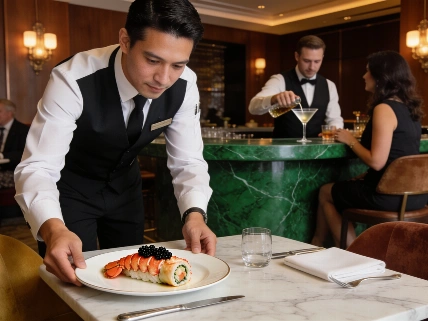

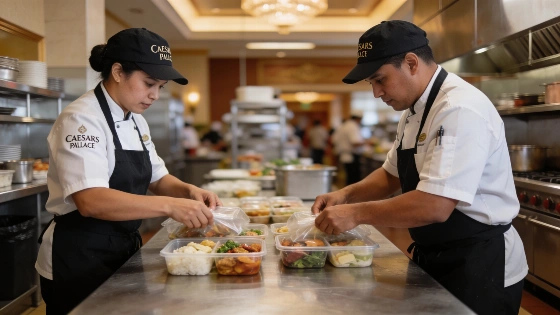
A four-day event at Caesars Palace in August 2026 partnered with Meals on Wheels America and The Just One Project to redirect leftover meals to Southern Nevada families and seniors, tackling food waste and insecurity in the region
At Caesars Palace in August 2026, what would have been just another mountain of hotel food waste became a lifeline for hundreds of Southern Nevada residents. Instead of sending untouched meals from a four-day conference straight to the landfill, organizers rerouted the surplus to families and seniors facing food insecurity—transforming excess into urgent relief.
Behind the scenes, Meals on Wheels America, Caesars Entertainment, and The Just One Project coordinated a logistical operation that turned the hotel’s leftovers into a community resource. Each day, as the conference wrapped, Caesars Palace staff collected untouched prepared food, carefully labeling and dating every tray. The Just One Project then repackaged the meals to meet food safety standards before distributing them to local nonprofits and community groups.
How the Food Rescue Worked
This was not a simple handoff. Donating surplus food in the hospitality industry is often blocked by concerns over safety, staffing, and logistics. At Caesars Palace, the process was tightly controlled: only untouched, safely stored food was eligible, and every item was tracked from kitchen to recipient. The Just One Project’s team ensured that all meals were repackaged according to strict guidelines, closing the gap between hotel kitchens and hungry households.
For hotels, the benefits are twofold. Operationally, donating surplus food reduces disposal costs and waste volume. Socially, it connects the property to the community in a direct, measurable way. Caesars Palace, a major Strip resort, demonstrated that even large-scale events can redirect resources to those who need them most—if the right systems are in place.
Southern Nevada’s Food Insecurity Challenge
The need is acute. According to Feeding America’s 2026 Map the Meal Gap study, roughly one in six Southern Nevada residents lacks consistent access to nutritious food. The situation is even more severe for children, with one in four living in food-insecure households. These numbers are not abstract: they represent thousands of Las Vegas-area families who struggle to put meals on the table, even as resorts and event venues routinely overproduce food for buffets, banquets, and conferences.
Globally, the United Nations reports that more than a quarter of the world’s population experienced moderate to severe food insecurity as recently as 2005. In Las Vegas, the contrast is especially stark—luxury resorts on the Strip generate daily surpluses while neighborhoods just miles away face persistent hunger.
Blueprint for Hospitality and Community Partnerships
The Caesars Palace operation offers a replicable model for other Las Vegas hotels, restaurants, and event venues. The process is straightforward but requires commitment: identify eligible surplus, package and store it safely, coordinate with a trusted nonprofit, and ensure timely distribution. The Just One Project’s role as a bridge between hospitality businesses and local organizations is critical, providing the expertise and infrastructure that most hotels lack.
Similar food rescue programs could be implemented across the city’s restaurant chains, convention centers, and wedding venues. For the hospitality industry, the incentive is clear—lower waste costs and a tangible contribution to the community’s well-being. For residents, it means more reliable access to nutritious meals, especially in low-income areas where food insecurity is most severe.
Las Vegas Resorts Face a Choice
Caesars Palace’s partnership with Meals on Wheels America and The Just One Project is not just a feel-good story—it’s a test case for whether Las Vegas’s hospitality giants are willing to address the city’s most basic needs with the same efficiency they bring to guest service. The imbalance between surplus and scarcity is not inevitable. With the right logistics and local partnerships, the Strip’s excess can become a resource for the neighborhoods that need it most. The real question is whether other resorts will follow Caesars Palace’s lead or let opportunity—and food—go to waste.