

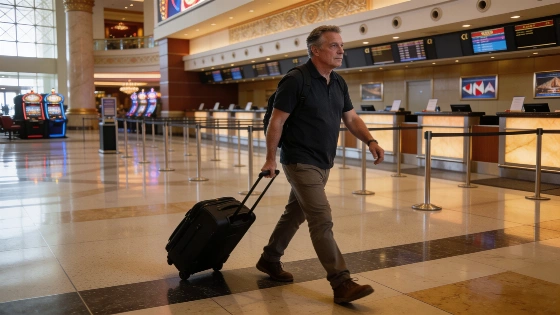
Las Vegas resorts and tourism officials are ramping up efforts to attract Canadian travelers after a sharp drop in visits linked to new tariffs and political tensions. Visitor numbers from Canada remain well below pre-2024 levels
Las Vegas is feeling the sting of a Canadian tourism freeze, as new tariffs and a deepening trade dispute between the U.S. and Canada have driven a sharp decline in cross-border travel. Resorts and tourism agencies across Southern Nevada are now scrambling to reverse a downturn that has left hotel rooms emptier and visitor spending down.
Canadian travelers, once a reliable source of overnight stays and gaming revenue for Las Vegas, have pulled back in significant numbers since the return of President Donald Trump and the escalation of a bilateral trade war. The fallout has been immediate: according to Statistics Canada, Canadians made 25% fewer return border crossings and spent $2.4 billion (CA$3.3 billion) less on U.S. travel in 2025 compared to the previous year. The impact is especially acute for Las Vegas, which has long relied on Canadian snowbirds and vacationers to fill rooms during the winter and shoulder seasons.
Trade Tensions Hit Visitor Numbers
The latest round of tariffs—announced just days after the 2026 World Cup final—slapped a 50% import tax on a range of Canadian goods, with Canada retaliating in kind. The diplomatic rift has spilled over into travel sentiment. Many Canadians now see U.S. trips as both more expensive and less welcoming, a perception reinforced by high-profile political barbs and even symbolic gestures like the proposed renaming of Lake Ontario to “Lake America.”
Las Vegas, which typically benefits from a steady influx of Canadian visitors escaping the cold, has seen the effects firsthand. While some destinations have tried to soften the blow—Las Vegas tourism officials recently traveled to Canada to meet with travel advisers and tour operators, and certain downtown hotels are offering Canadian dollar parity—these efforts have yet to produce a meaningful rebound. Air travel from Canada to the U.S. has declined every month through June 2026, and the U.S. National Travel and Tourism Office reports that overnight visits, which drive the most spending, remain below last year’s already depressed levels.
Resort Promotions and Local Response
In response, Las Vegas resorts and the Las Vegas Convention and Visitors Authority have launched targeted campaigns to lure Canadians back. Steve Hill, president of the LVCVA, emphasized during a recent visit to Vancouver that “we care about Canada,” highlighting new deals and incentives. Some properties are matching the Canadian dollar to the U.S. dollar for bookings, while others are rolling out special packages aimed at snowbirds and families.
Despite these promotions, skepticism remains high among Canadian travelers. Vancouver marketing executive Josh Loewen, who once made regular trips to Las Vegas with his family, now chooses Mexico instead, citing both the cost and the political climate. Calgary resident Eileen March has gone further, refusing even to book flights with U.S. layovers until there is a change in the White House. Their decisions echo a broader trend: for many Canadians, the issue is not the quality of the Las Vegas experience, but whether they feel welcome or safe spending their money in the U.S. during a period of heightened tension.
Economic Impact for Las Vegas
The consequences for Las Vegas are measurable. According to Visit California, Canadian visitation to the state fell 20% in 2025, and Florida reported a 7% drop. While Nevada-specific figures have not been released, the pattern is clear: fewer Canadians are crossing the border, and those who do are spending less. The timing is especially challenging as the city heads into the fall and winter, when Canadian snowbirds typically boost occupancy at resorts in Las Vegas, Henderson, and beyond.
Some local tourism officials remain cautiously optimistic, pointing to a slight uptick in border crossings during the 2026 World Cup, which was cohosted by the U.S., Canada, and Mexico. However, the momentum quickly faded after the new tariffs were announced. With airfares and hotel prices rising and the Canadian dollar still weak, the barriers to a full recovery remain substantial.
What Comes Next for Las Vegas Tourism
As the trade dispute drags on, Las Vegas faces a critical test: can it convince Canadian travelers to return before the winter season, or will the informal boycott extend into another year? The answer will shape not just resort occupancy and gaming revenue, but the broader visitor economy that supports thousands of local jobs. For now, the city’s outreach efforts are running up against hard political realities—and the longer the standoff continues, the more difficult it becomes to win back a market that once seemed unshakable. The lesson for Las Vegas is clear: international goodwill can evaporate quickly, and no amount of marketing can fully offset the impact of national policy decisions that make visitors feel unwelcome or undervalued.