

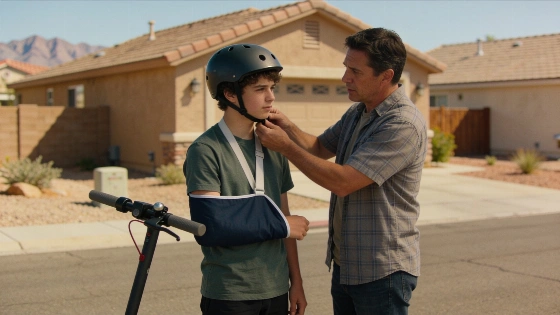
Southern Nevada pediatricians are reporting a surge in severe head and facial injuries linked to e-bikes and e-scooters, with Intermountain Health urging families to rethink safety as summer and back-to-school seasons approach
Broken bones can heal, but a traumatic brain injury can change a child's life forever. That's the blunt reality facing Las Vegas families as pediatricians in Southern Nevada report a sharp increase in severe injuries tied to electric bikes and scooters—devices now common on local streets but carrying risks many parents still underestimate.
According to Intermountain Health, the most alarming cases involve children and teens suffering head trauma and facial injuries at rates more comparable to motorcycle crashes than traditional bicycle accidents. The rapid acceleration and higher speeds of e-bikes and e-scooters are driving a new wave of emergency room visits, with concussions and fractures now routine outcomes.
Why E-Bike and E-Scooter Risks Are Different
Dr. Sheryl Morelli, Senior Medical Director for Children’s Health in Nevada, points to a critical difference: “They lead to more facial injuries than a typical bike accident might, and we also see more head trauma—actually closer to what you see with motorcycle accidents than with bicycle accidents.” The devices’ power and speed mean that a moment’s distraction or a single poor decision can have lifelong consequences, especially for younger riders whose cognitive development may not match their physical coordination.
Unlike traditional bikes, e-bikes and e-scooters can accelerate quickly and reach speeds that amplify the force of any collision. The result: more severe injuries, longer recovery times, and a higher risk of permanent damage. For Las Vegas parents, the stakes are especially high as summer break and the back-to-school rush bring more kids onto local roads and sidewalks.
Key Safety Measures for Las Vegas Families
Intermountain Health is urging families to take a hard look at whether their children are truly ready for these devices. Age alone isn’t enough—maturity and decision-making skills matter just as much. Dr. Morelli emphasizes that “all kids are not developmentally ready for these e-scooters or e-bikes,” warning that even physically capable children may lack the judgment to navigate traffic and hazards safely.
Helmet use is non-negotiable. “You should be wearing your helmet on anything with wheels,” Dr. Morelli insists. Yet helmet compliance remains inconsistent, even as evidence mounts that proper head protection dramatically reduces the risk of catastrophic injury. Intermountain Health regularly hosts bike and helmet giveaways and provides resources to help families choose the right fit and build safe riding habits.
Distraction is another major threat. Earbuds, phones, and inattentive riding can turn a minor incident into a life-altering crash. As Dr. Morelli puts it, “If it’s a pedestrian, e-bike or e-scooter versus a car, the car is always going to win.”
Community Response and Resources
With e-bikes and e-scooters now a fixture in neighborhoods from Henderson to Summerlin, Intermountain Health is stepping up outreach efforts. The organization’s helmet safety page offers guidance on fit and usage, while its Find a Doctor tool connects families to pediatricians, sports medicine, and concussion care providers across Southern Nevada.
Local hospitals are bracing for a continued uptick in injuries as more children take to the streets during the hottest months and the start of the school year. The message from pediatric experts is clear: prevention is the only reliable cure.
Las Vegas has always been a city that adapts quickly to new trends, but the rapid adoption of e-bikes and e-scooters has outpaced public awareness of their dangers. Until families, schools, and local leaders treat these devices with the seriousness they demand, the city’s emergency rooms will keep seeing preventable injuries. The technology isn’t going away—but neither are the consequences for those who ignore the risks.