
Longstanding Las Vegas venues like Atomic Liquors and Golden Steer Steakhouse continue to draw locals and visitors with their unique stories, classic menus and decades of hospitality. Here’s what sets these enduring spots apart in a city known for constant change
In a city where new openings and closures are routine, a handful of Las Vegas bars and restaurants have managed to outlast trends, fads and even the demolition crews. These venues are not just places to eat or drink—they are living archives of the city’s evolution, each with a story that stretches back decades and a clientele that spans generations.
Step inside Atomic Liquors and you’re walking into a piece of 1952. The bar’s neon sign still glows over Fremont Street, but the days of rooftop atomic blast viewing are long gone. What remains is a menu anchored by the original Atomic Cocktail, a potent mix of vodka, cognac, sherry and Champagne. Atomic Liquors was the first in Las Vegas to secure a Tavern License, and its midcentury bones have survived the city’s relentless redevelopment.
Steakhouses With a Past
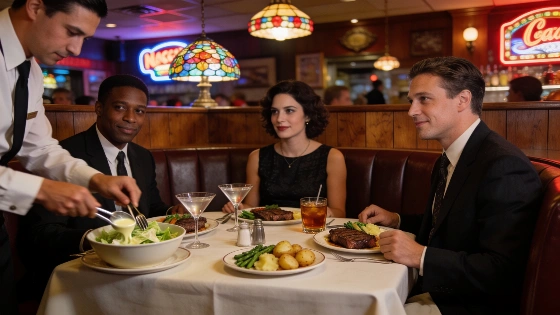
Golden Steer Steakhouse is a direct line to the city’s Rat Pack era. Open since 1958, the restaurant’s leather booths are named for Frank Sinatra, Marilyn Monroe and Elvis Presley, and the Mob Room still draws curious diners. The menu is as much performance as meal—tableside Caesar salads and bananas foster are prepared with the same showmanship that once attracted made men and movie stars. The Golden Steer’s walls, lined with old rifles and memorabilia, trace Las Vegas’ transformation from a dusty outpost to an entertainment capital.
Bob Taylor’s Original Ranch House, established in 1955, leans into its Old West roots. The restaurant’s wood-paneled walls are covered with John Wayne posters, saddles and spurs, and the mesquite-grilled steaks are a nod to founder Bob Taylor’s original method. The Ranch House’s longevity was recognized this year with an America’s Classic Award from the James Beard Foundation, a rare national honor for a local institution.
Classic Dining Rooms and Hidden Lounges
Hugo’s Cellar, tucked away downtown, has built its reputation on old-school hospitality. Women are greeted with long-stemmed roses, and the menu features tableside salad service and flaming cherries jubilee. The restaurant’s stained glass lamps and plush booths create a setting that feels untouched by the city’s rapid turnover. Hugo’s Cellar is one of the few places where seafood dishes like Queens Lobster share equal billing with charbroiled steaks, and regulars return for the sense of occasion as much as the food.
The Italian American Club, once a members-only enclave in the 1960s, now welcomes the public for classic plates of spaghetti bolognese, chicken marsala and osso buco. The walls are packed with signed photos and showbiz memorabilia, and live music is a near-nightly feature. The club’s three dining rooms are typically filled with sharply dressed patrons, a reminder that some corners of Las Vegas still value tradition over novelty.
Asian Cuisine and Kitsch Landmarks
Las Vegas’ Asian dining scene owes much to pioneers like Kung Fu Thai & Chinese Restaurant and Osaka Japanese Bistro. Kung Fu, which opened in 1973, was among the first to introduce authentic Thai flavors to the city, laying the groundwork for today’s diverse Asian food landscape. Its menu runs hundreds of items deep, but Thai fried chicken wings and chicken curry remain favorites among locals who grew up on the restaurant’s signature dishes.
Osaka Japanese Bistro made history in 1967 as the city’s first Japanese restaurant. Founded by Sam Nakanishi and still operated by his family, Osaka’s menu features dozens of sushi rolls—including the Roppongi, which earned a spot on Food Network’s “Diners, Drive-Ins and Dives”—as well as a wide range of entrees and appetizers. The restaurant’s legacy is visible in every detail, from the name honoring Aiko Nakanishi’s hometown to the continued family ownership.
Peppermill Restaurant and Fireside Lounge, open since 1972, is a monument to Las Vegas kitsch. The Fireside Lounge, with its pink and purple neon, mirrored tiles and bubbling water fountain, is the city’s most flamboyant setting for people-watching. The menu is as over-the-top as the décor, featuring 64-ounce Scorpions, French toast ambrosia and the “legendary” Peppermill burger. While the diner side offers classic comfort food, the real draw is the lounge’s theatrical atmosphere, where locals and tourists mingle under the glow of neon and faux greenery.
Why These Venues Still Matter
While Las Vegas is quick to embrace the new, these longstanding venues have become anchors for both residents and visitors seeking a sense of continuity. Their survival is not accidental—each has adapted just enough to stay relevant without sacrificing the details that made them memorable in the first place. In a city where even the most hyped concepts can vanish overnight, these restaurants and bars have proven that authenticity and history still have a place.
For travelers who want more than the latest opening, these institutions offer a direct connection to the city’s past. They are not relics—they are active participants in the ongoing story of Las Vegas. As new concepts like the 24-hour drive-thru from Marathon Burger prepare to enter the market, as reported earlier, the city’s oldest venues continue to set the standard for what it means to endure in Las Vegas hospitality. The lesson is clear: in a town obsessed with reinvention, the places that last are those that never forget where they started.