
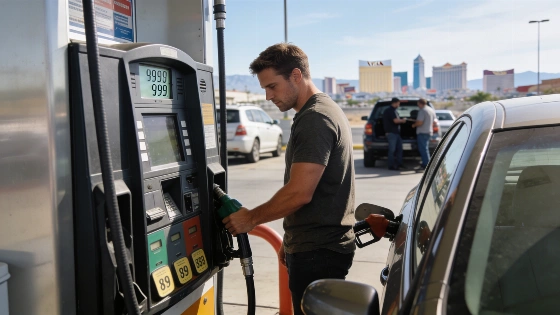
Travelers heading to Las Vegas for Labor Day will face the highest gas prices ever recorded for the holiday, with local averages nearing $5 per gallon and traffic congestion expected on I-15 southbound.
Labor Day weekend travelers in Las Vegas are confronting a new record: the highest gasoline prices ever logged for the holiday, with local averages now outpacing both state and national figures. The Las Vegas Valley saw regular unleaded reach $4.90 per gallon on Thursday, a full 10 cents higher than last week and $1.06 above the same date last year, according to AAA data.
For visitors and residents alike, the sticker shock at the pump is impossible to ignore. Nevada’s statewide average now stands at $4.91 per gallon, nearly a dollar higher than a year ago and well above the national average of $4.14. Diesel drivers are faring even worse, with valley prices at $6.08 per gallon—up 24 cents in just a week and $2.17 more than last year.
Why Prices Are Surging
The culprit behind these relentless increases is not local demand, which typically drops as summer ends, but global oil volatility. According to Doug Johnson of AAA Mountain West Group, ongoing instability in the Strait of Hormuz has pushed crude oil to $90 per barrel, directly fueling the price spike at Nevada pumps. "After a record-setting August, this Labor Day weekend is on track to also set a record at the pump," Johnson said. Nationally, the average has never topped $4 per gallon on Labor Day—until now.
While the rest of the country is also feeling the pinch, Nevada’s surge is sharper. The previous Las Vegas Labor Day record was set in 2022 at $4.82 per gallon, but this year’s numbers have already eclipsed that mark before the weekend even begins. Nationally, the Labor Day record was $3.82 per gallon in 2012, making this year’s $4.14 average a dramatic leap.
Impact on Las Vegas Visitors and Traffic
Despite the price shock, Las Vegas remains a magnet for holiday visitors, especially those driving in from Southern California. The Regional Transportation Commission warns that the heaviest congestion will hit Interstate 15 southbound at the Nevada-California state line between 10 a.m. and 3 p.m. on Labor Day, as travelers head home. Motorists are urged to avoid this stretch during peak hours to sidestep gridlock.
For those planning to stay in the city, the high cost of fuel is just one more factor to budget for alongside rising hotel rates and event surcharges. The city’s visitor economy, already shaped by major events and new attractions, now faces the added pressure of transportation costs that show no sign of easing.
Las Vegas in the National Context
Las Vegas is not alone in feeling the squeeze, but the city’s dependence on drive-in tourism from California and neighboring states makes the impact more acute. The surge in fuel prices comes as the city continues to invest in new hospitality offerings, from high-limit gaming rooms to expanded entertainment venues, as reported earlier. Yet, for many visitors, the cost of simply getting to Las Vegas is now a major consideration.
As the city braces for another packed holiday weekend, the message is clear: Las Vegas remains a top destination, but the price of admission—at least at the gas pump—has never been higher. The relentless climb in fuel costs exposes the vulnerability of a city built on mobility and discretionary travel. Until global oil markets stabilize, both visitors and locals will be paying a premium just to keep moving in the Entertainment Capital of the World.