
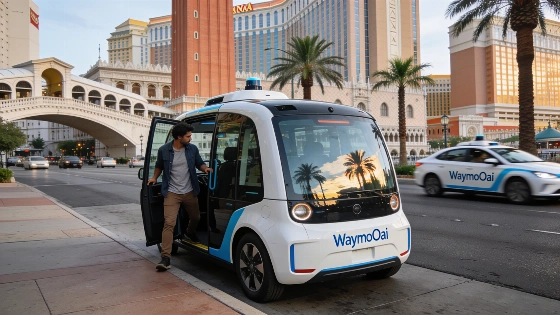
Waymo has started giving fully driverless rides to the public in Las Vegas, jumping into a city where Zoox already runs paid robotaxis and rolling out its new Ojai vehicles on the Strip and at major hotspots.
Waymo’s robotaxis are now picking up real passengers in Las Vegas. The company has moved past test runs and opened its fully autonomous ride-hailing service to the public. This puts Alphabet’s self-driving arm in direct competition with Zoox, which already charges for robotaxi rides in the city.
Las Vegas is not a blank slate. Zoox has been running paid rides here for months. Now, two of the biggest names in autonomous vehicles are going head-to-head on the same streets. Waymo’s first wave includes a few dozen cars. The company plans to add more as demand grows. According to TechCrunch and industry roundups, Zoox is capped at 100 vehicles in Las Vegas until September 25, 2026. That cap is set by regulators.
Before opening to the public, more than 100,000 people had already signed up for Waymo's Las Vegas waitlist, reflecting strong local and visitor interest.
New hardware and service area
Las Vegas is one of the first cities to get Waymo’s Ojai vehicles. These cars use the company’s sixth-generation Waymo Driver hardware. It’s the latest version of their tech. The current service zone covers about 24 square miles. Riders can get picked up at places like Allegiant Stadium, The Venetian, Chinatown, and parts of Spring Valley. FOX5 Vegas and the Las Vegas Sun confirmed these details. For now, Waymo’s cars stick to surface streets. Highways are off-limits in this phase.
Waymo spent months mapping and testing Las Vegas roads before letting the public in. The company says over 100,000 people have already signed up to try the rides. That’s a big pool of potential customers. Local reports and Waymo both stress this is not a pilot. It’s a real commercial service. The fleet will grow gradually, and the Ojai vehicles are now in regular use.
Scaling up and expanding reach
Waymo’s Las Vegas launch is part of a bigger push across the U.S. The company has also started taking riders in Denver, San Diego, and Tampa. Industry sources say that as of late September 2026, Waymo is growing in several cities at once. Zoox, meanwhile, is still focused only on Las Vegas for its commercial service.
At launch, Waymo's Las Vegas service is restricted to surface roads, deliberately excluding highways to prioritize safety and operational reliability in the initial phase. The service area includes major destinations like Allegiant Stadium, The Venetian, Chinatown, and Spring Valley.
For Las Vegas, the arrival of Waymo’s Ojai fleet marks a shift. Pilot projects are over. This is about running a repeatable business. Waymo’s focus now is on how fast it can copy its service in new cities, not just proving the tech works in one place. As reported earlier by Vegas Report, Waymo’s driverless rides are now available along the Strip and in nearby neighborhoods. Locals and tourists have a new way to get around.
Competitive pressure and economic questions
The robotaxi race in Las Vegas is heating up. Zoox got here first. Tesla is also in the mix as a major player in self-driving tech. Waymo is valued at $126 billion and raised $16 billion earlier this year. That’s a lot of money—and a lot of pressure to show that robotaxis can make real profits at scale.
Adding new cities and more cars helps Waymo’s case. But the company still has to prove it can turn expansion into steady revenue. The economics of robotaxis in each city are still unclear. Waymo is moving fast, but the business side is not settled.
What this means for Las Vegas
Las Vegas is now a real-world test for the next wave of autonomous transport. Both Waymo and Zoox are running robotaxis here. Residents and visitors can pick between two rival services, both using the latest tech. More than 100,000 people have already shown interest. The city is now a key test market for the industry.
Waymo’s move is more than just another ride option. It’s a direct challenge to its rivals and a test of whether its expansion plan can work outside of pilot zones. The cars are out on the streets. The big question is whether these services can make money for their backers. For now, Las Vegas is the front line in the robotaxi race. The outcome here could decide how fast driverless rides spread to other American cities.