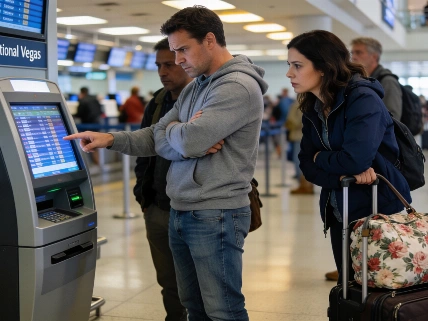


Las Vegas visitation is down 7.5 percent, with sharp drops among young adults and Canadians. Higher prices and airfare are keeping lower income travelers away, even as spending per visitor rises.
Las Vegas is seeing fewer visitors these days, even as those who do come are spending more. The city’s top tourism official says the gap between high and low income travelers is changing who can afford a trip to the Strip—and who is staying home.
According to the Las Vegas Convention & Visitors Authority, total visitation is down 7.5 percent compared to before the pandemic. The decline is even sharper among Canadians, first-time visitors, and adults aged 21 to 29—groups that once drove much of the city’s growth. That’s about 4 million fewer visitors each year, which directly affects hotels, restaurants, and entertainment venues across Las Vegas. In 2025, the city welcomed 38.5 million visitors, the biggest annual drop since the pandemic shutdown in 2020, according to Travel and Tour World citing LVCVA figures.
Travel costs and economic pressures
Behind these numbers is a national economic divide that’s hitting Las Vegas hard. Steve Hill, CEO of the Las Vegas Convention & Visitors Authority, told Nevada’s Economic Forum that the so-called K-shaped recovery is leaving lower income households behind. While the wealthiest 10 percent of Americans have seen their fortunes rise, the bottom half are dealing with stagnant wages and rising debt. “They are continuing to live paycheck to paycheck,” Hill said, noting that credit card delinquencies are up and people have less money to spend on travel.
Airfare is making things worse. Domestic ticket prices to Harry Reid International Airport have jumped more than 20 percent since March, rising faster than the national average. Budget airlines have raised fares the most, and the sudden closure of Spirit Airlines—once the airport’s second largest carrier—has left a gap that other airlines haven’t fully filled. Even if jet fuel prices drop, Hill said, there’s little hope that airfares will return to previous lows. According to a Las Vegas Review-Journal analysis, the spike in airfare followed the onset of the Iran war, putting more strain on travel budgets.
Who is still coming to Las Vegas
Even with fewer visitors, those who do come are spending more. Visitor spending per person has climbed since 2019, according to LVCVA data. But the crowd is changing: higher income travelers are booking more rooms and premium experiences, while budget travelers are increasingly priced out.
Recent LVCVA surveys show that only 19 percent of potential visitors now prioritize saving or spending for a vacation, a number that has been “gradually deteriorating” as basic living costs take priority. Half of respondents said making ends meet is more important this year than last. Across the country, consumer sentiment is at an 80-year low, and few expect a quick turnaround.
Impact on the Las Vegas economy
For a city built on tourism, the effects are immediate. Fewer visitors mean less demand for entry-level hospitality jobs, lower occupancy at budget hotels, and a shift in marketing toward wealthier guests. Still, Brian Gordon of Applied Analysis told the Economic Forum that overall tourism revenue remains “relatively stable and in fact growing in some areas,” thanks to higher spending per visitor. While total visitation is down, convention attendance actually rose 11.2 percent year over year to 3.9 million in the first seven months of 2026, showing a shift in the type of travelers coming to the city.
Las Vegas isn’t alone in facing these challenges. Other local sectors, like fitness and residential development, are also adjusting to changing consumer priorities, as seen in recent coverage of new business strategies in East Las Vegas.
What happens next
The Economic Forum will meet again in October and November to finalize the state’s revenue forecast, which will shape Nevada’s next budget. For now, Las Vegas is holding steady, but the city’s visitor economy is clearly being reshaped by forces outside its control. The Strip’s future depends on whether it can keep attracting both high spenders and the broad base of travelers who once made Las Vegas a top destination. If current trends continue, the city could become a place for the few, not the many—a challenge for its hospitality model.