
A proposed Business Improvement District could bring $1.9 million annually to the Las Vegas Arts District, funding safety, maintenance, and business support as early as 2027 if approved by property owners and the city council
The Las Vegas Arts District is on the verge of a major transformation, as property and business owners push to create a Business Improvement District (BID) that would inject nearly $2 million a year into the neighborhood’s safety, cleanliness, and economic future. If the plan moves forward, the Arts District could see dedicated funding for security, maintenance, and public spaces—resources that have long lagged behind the area’s rapid growth.
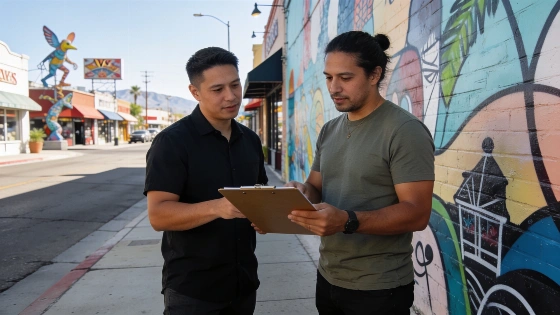
For years, the Arts District has been a patchwork of independent businesses and creative spaces, but the pandemic era brought a surge of new residents, visitors, and investment. That growth has outpaced the neighborhood’s infrastructure, leaving business owners to grapple with increased traffic, safety concerns, and the need for a unified voice in city affairs.
What the BID Would Change
The proposed BID would cover the area between East Bonneville Avenue and West Wyoming Avenue, stretching from Las Vegas Boulevard to the railroad tracks. Under the plan, property owners would pay annual assessments—$6.50 per $1,000 of assessed value for commercial, apartment, and nonprofit properties, and $3.25 per $1,000 for residential condominiums and homes. The resulting $1.9 million annual budget would be steered by a board representing commercial, residential, nonprofit, and artist stakeholders.
Funds would be earmarked for five priorities: safety and security, enhanced cleaning and maintenance, placemaking and public realm improvements, business support and economic development, and marketing and activation. According to Sam Cherry, a BID board member and local property owner, the BID would serve as a direct conduit between businesses and the city, providing a stable funding source for improvements that individual owners can’t tackle alone.
Approval Process and Timeline
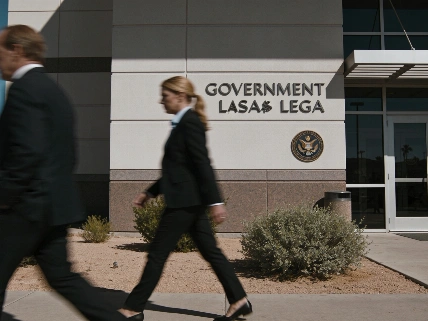
Launching the BID is far from automatic. The process begins with property owners inside the proposed boundaries submitting signatures representing more than half of the area’s total assessed property value. Only then would the proposal advance to a public hearing and vote by the Las Vegas City Council. While the city would remain a partner, it would not control the BID’s day-to-day operations.
If the plan clears these hurdles, Cherry expects the BID could be operational by the second quarter of 2027. The board would include at least three commercial or apartment building owners, three business owners, two residential property owners or residents, one nonprofit ratepayer, and one artist living or working in the district.
Why the Arts District Wants Dedicated Funding
The Arts District’s evolution from a fringe neighborhood to a destination for dining, nightlife, and creative businesses has brought both opportunity and strain. As Cherry put it, “With that comes traffic, comes employees, comes more safety concerns.” The BID is designed to address these challenges head-on, providing a mechanism for collective action and sustained investment.
Other Las Vegas neighborhoods have seen the impact of targeted investment and coordinated management. For example, the previous investigation into Downtown Las Vegas highlighted how focused development can reshape a district’s fortunes. The Arts District’s BID proposal aims to replicate that kind of momentum, but with a structure that keeps control in the hands of local stakeholders.
What Happens Next
For now, the BID remains a proposal. Property owners must decide whether the annual assessment is worth the promise of cleaner streets, improved safety, and a stronger business environment. If enough support materializes, the city council will have the final say after a public hearing. Those interested in tracking the BID’s progress or learning more can visit lvartsdistrictbid.com.
The Arts District’s push for a BID is a calculated move to secure its future as a thriving, safe, and attractive neighborhood for both locals and visitors. Unlike many Las Vegas initiatives that rely on city or corporate leadership, this effort is being driven from the ground up by those with the most at stake. If the BID is approved and delivers on its promises, it will mark a rare instance of a Las Vegas neighborhood taking control of its own destiny—setting a precedent for how local business districts can shape their own growth, rather than waiting for outside intervention.