

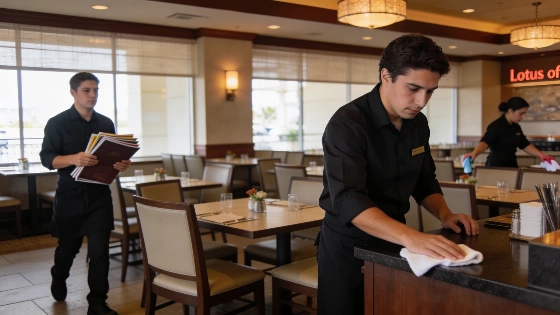
Two major restaurants will close at Red Rock Resort in Summerlin on October 29, affecting nearly 150 workers. The Oyster Bar will reopen under Station Casinos management the next day, with future plans for the vacated spaces still pending.
Red Rock Resort in Summerlin is about to lose two of its most prominent dining destinations. Both Lotus of Siam and Naxos Taverna will close their doors at the resort on October 29, marking a significant shakeup for the property’s restaurant lineup and impacting dozens of hospitality workers.
The abrupt end to these tenancies was confirmed by Station Casinos, which operates Red Rock Resort. According to the company, the entities behind Lotus of Siam, Naxos Taverna, and The Red Rock Oyster Bar have mutually agreed to terminate their leases effective October 29. The Oyster Bar, however, will not be gone for long—Station Casinos will resume direct operation of the seafood favorite on October 30, promising to maintain the recipes and dishes that have built its loyal following.
Restaurant Closures and Workforce Impact
The closure of Lotus of Siam at Red Rock will affect 81 employees, as reported by the Nevada Department of Employment, Training and Rehabilitation. Naxos Taverna and the adjacent Kallisto Oyster Bar employ another 67 people, according to a layoff notice filed by Parlay Projects. While Station Casinos has emphasized that The Red Rock Oyster Bar will continue under its own management, the future of the other two restaurant spaces remains undecided, with announcements expected in the coming weeks.
For guests and locals, the loss of Lotus of Siam at Red Rock is more than just a menu change. The restaurant’s original location on East Sahara Avenue has long been a magnet for food lovers, drawing limousines from the Strip and earning national acclaim, including a James Beard Award for chef and owner Saipin Chutimas. The Commercial Center flagship recently reopened after renovations, but the Red Rock outpost has faced turbulence since its inception.
Legal Disputes and Brand Tensions
The Red Rock location of Lotus of Siam has operated under a cloud since a trademark lawsuit erupted two years ago. The dispute, involving the restaurant’s founders and The Bua Group, centered on recipe alterations and the use of the Lotus of Siam name at new locations, including Red Rock. While it remains unclear whether the legal battle directly triggered the closure, the timing is hard to ignore. The lawsuit highlighted the restaurant’s reputation, citing accolades from Gourmet Magazine and Travel Magazine for its Northern Thai cuisine.
Despite the legal wrangling, Lotus of Siam’s original Commercial Center location has bounced back, reopening in May and reclaiming its status as a destination for both locals and visitors. The Red Rock closure, however, leaves a gap in Summerlin’s upscale dining scene and raises questions about the future direction of the resort’s culinary offerings.
What’s Next for Red Rock Resort
Station Casinos has made clear that The Red Rock Oyster Bar will not be shuttered, but instead will return under its own management with the same seafood dishes that have made it a citywide staple. The company has not yet revealed what will replace Lotus of Siam and Naxos Taverna, only stating that plans for the spaces will be announced soon.
For now, diners seeking Lotus of Siam’s acclaimed Thai cuisine will need to head to the original Sahara Avenue location, which recently celebrated its grand reopening. The closure at Red Rock underscores the volatility of the Las Vegas restaurant landscape, where even celebrated brands are not immune to legal, operational, or partnership challenges.
Station Casinos’ decision to reclaim direct control of The Red Rock Oyster Bar while allowing two high-profile tenants to exit signals a calculated shift in strategy. Rather than clinging to troubled partnerships or drawn-out disputes, the operator is betting on its own proven concepts and leaving the door open for new culinary players. In a market as competitive as Las Vegas, only those who adapt quickly—and keep their legal and operational houses in order—will continue to thrive.